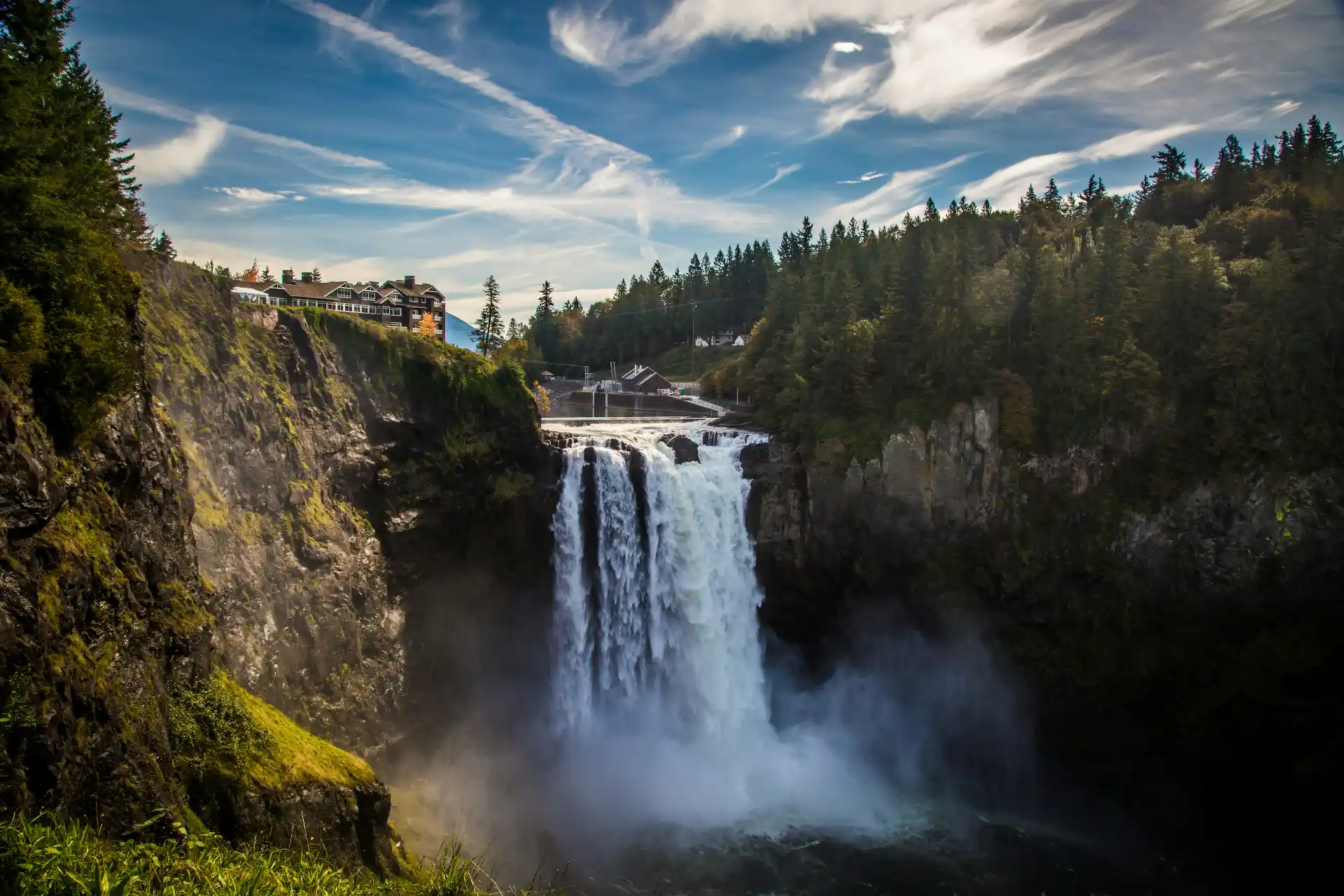
Snoqualmie Falls is the easiest big waterfall to reach from Seattle: about 30 miles east on I-90, roughly 40 minutes by car. Make a full day of it by adding the old railway town of Snoqualmie, a diner lunch in North Bend and a short, steep hike to Rattlesnake Ledge, all within 15 minutes of each other.
The falls take an hour, not a day, which is why so many visitors see them and drive straight home. The Snoqualmie Valley around them is the better reason to come: mountains close enough to touch, a railway museum with real trains, and small towns where the cafés still close mid-afternoon.
The plan at a glance: a Saturday from 9 am to about 5 pm · 5 stops in a 10-mile loop · about $30–40 per person with lunch, or about $5 if you pack food · free parking is available at the falls.

Getting there and parking at the falls
From downtown Seattle, take I-90 east and leave at the Snoqualmie exits, then follow signs to Snoqualmie Falls on SR-202. Without traffic it's about 40 minutes. The park at the top of the falls is open from sunrise to sunset every day of the year.
Snoqualmie Falls has a free parking lot across the road from the upper park, plus a paid lot right by the viewing area at $7 an hour. From the paid lot the main viewing platform is only about 200 feet away and wheelchair accessible; from the free lot you cross a pedestrian bridge over the road.
Cost: about $8–10 in gas for the car.
A Saturday in the Snoqualmie Valley, hour by hour
1. 9:00 am — Leave Seattle. Leave early on weekends in fall: by 11 am the falls parking is busy. Cost: fuel, shared.
2. 9:45 am — Snoqualmie Falls, upper viewpoints. The river drops 268 feet into a rocky gorge, and in October and November, when the rains return, the falls get louder and fuller than at any time in summer. Look from both observation decks, then walk the trail down to the lower viewpoint. It's steep on the way back up, so take it slow. Cost: free.
3. 11:15 am — Downtown Snoqualmie and the railway. Five minutes' drive away, the historic Snoqualmie Depot at 38625 SE King Street is home to the Northwest Railway Museum, with vintage rail cars lined up along the street outside. Inside the museum campus, the Train Shed Exhibit Hall is open Wednesday to Monday from 11 am to 4 pm through December. Cost: free to look outside; exhibit hall $5–10.
4. 12:30 pm — Lunch in North Bend. Ten minutes on, North Bend sits right under the sheer face of Mount Si. Its main street has several cafés and diners, including the one that fans of the TV series Twin Peaks still come to see. Cost: about $16–24 per person.
5. 2:00 pm — Rattlesnake Ledge. A 15-minute drive south brings you to Rattlesnake Lake and the trail up to the ledge: about 4 miles round trip, gaining some 1,100 feet on a well-built path. The view from the top looks straight down on the lake and across the valley. Allow 2–3 hours. Cost: free.
6. About 5:00 pm — Back to Seattle. Sunset is around 6:10 pm in mid-October and earlier after the clocks change on November 1, so start down the trail by 4. Cost: included in fuel.
Swap the hike for a train ride
On weekends from April to October, the Northwest Railway Museum runs 2-hour round-trip train excursions from the Snoqualmie and North Bend depots, with admission to the Train Shed Exhibit Hall included. In late fall the regular excursions give way to the museum's Halloween Train, which runs on October 24–25, October 31 and November 1, 2026, with hot cider, live music, crafts and costumes encouraged for all ages.
The train replaces the hike nicely if you have kids, older relatives or a rainy day. Book through the Northwest Railway Museum site, where current ticket prices and departure times are listed, and plan the rest of your day around the departure.
What the day costs
Gas for the car: about $8–10.
Parking at the falls: free across the road, or $7 an hour by the viewing area.
Lunch: about $16–24 per person.
Exhibit hall: $5–10, or included with a train ticket.
Total: about $30–40 per person for two people sharing a car. Pack sandwiches and skip the museum, and the whole day costs little more than the gas.
Tips for a good valley day
Wear real shoes. Both the lower falls trail and Rattlesnake Ledge are steep, and the ledge path gets slick when wet. The ledge itself has a long, unfenced drop, so keep kids and dogs close at the top.
Fall weather changes the plan. On a rainy day the falls are even better, but skip the ledge, since the view disappears into cloud. Use the extra time for the train or a long lunch.
Before you go: falls hours and parking fees and the railway museum's schedule and exhibit hours were confirmed with the falls and the museum in October 2026. Trail figures are approximate; check conditions before you hike.
More days out from Seattle
Want a longer trip over the mountains? Our Leavenworth fall day trip continues east on US-2. Rather go without a car? The Bainbridge Island walk-on ferry day needs no driving at all. Or open the HollyUp planner for day trips, choose Seattle and set your budget there.
FAQ
How far is Snoqualmie Falls from Seattle?
Snoqualmie Falls is about 30 miles east of downtown Seattle, roughly 40 minutes by car via I-90 and SR-202 without traffic. There is no direct public transit to the falls, so most visitors drive or join a tour.
Is Snoqualmie Falls free?
Seeing the falls costs nothing; the only possible charge is parking. Leave the car in the no-fee lot on the far side of SR-202 and walk over, or pay by the hour to park steps from the main platform. Gates follow daylight, all year.
How long should you spend at Snoqualmie Falls?
Most people spend 30 minutes to an hour: time for both upper viewpoints and, if you're up for it, the steep trail to the lower viewpoint and back. Add the nearby towns of Snoqualmie and North Bend and Rattlesnake Ledge for a full day.
When are Snoqualmie Falls at their most powerful?
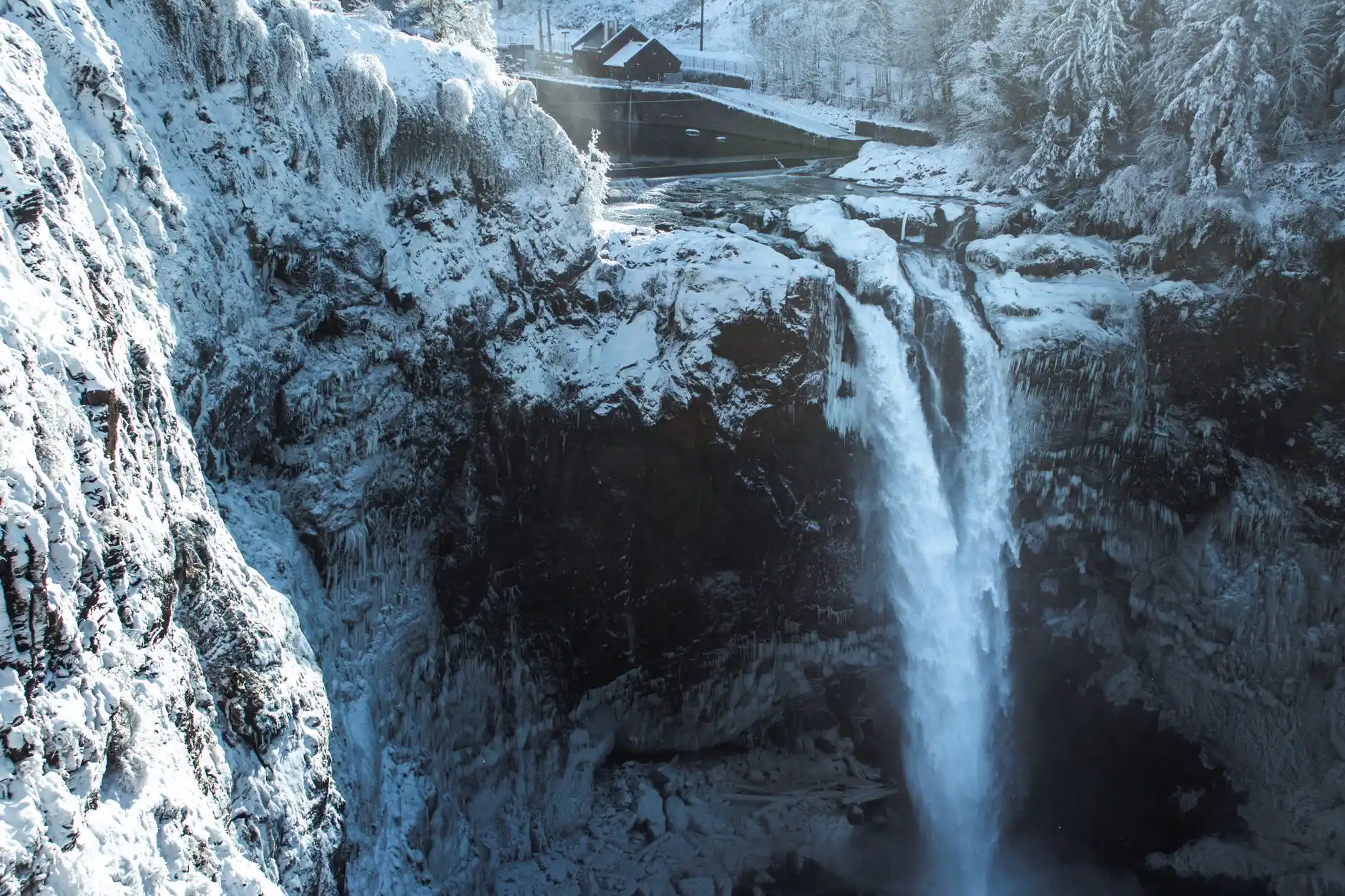
The falls are strongest in late fall, winter and spring, when rain and snowmelt raise the Snoqualmie River. Early morning on a weekday is the quietest time. In summer the flow is lower, but the weather for the trails nearby is better.
Is the Rattlesnake Ledge hike hard?
It's moderate: a 4-mile round trip that gains around 1,100 feet on a well-maintained trail. Most hikers take two to three hours round trip. The top is an exposed rock ledge with steep drops, so stay back from the edge.